

Realistic Appearance
One of the biggest perks of using texture maps is how they transform flat 3D objects into something that looks and feels real. By applying maps, you can give an object depth, surface detail, and shine.
After combining multiple maps, each parameter can be fine-tuned—allowing you to freely adjust surface roughness, glossiness, or bump intensity to achieve the exact visual effect you want.
Improved Workflow Efficiency
Without texture maps, adding surface detail to a 3D model requires manually deforming the mesh to create bumps and wrinkles—a time-consuming process that demands advanced modeling skills.
Moreover, subdividing the mesh for high-resolution detail increases file size and can slow down performance. By using texture maps, you can achieve rich surface detail and depth without the need for heavy mesh editing, resulting in a much faster and more efficient workflow.
Design Flexibility
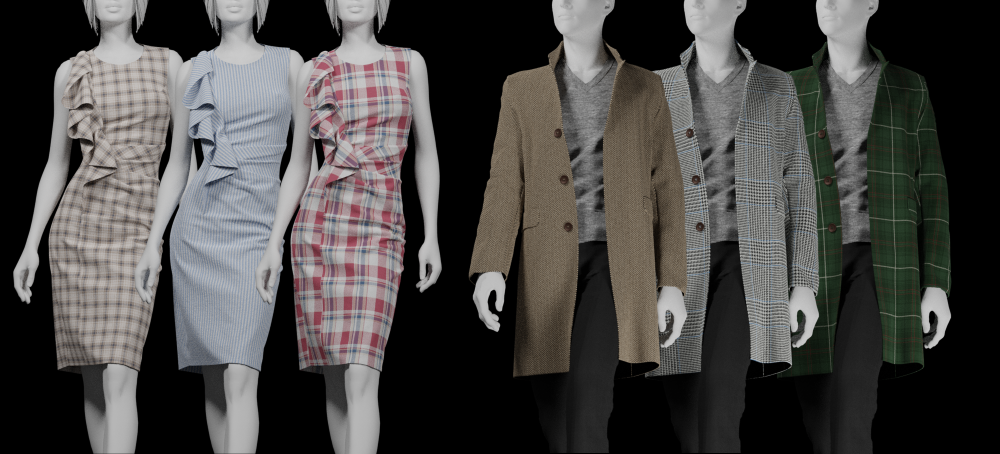
Texture maps are easy to create, modify, and swap out. Simply preparing maps with different colors or patterns allows you to change an object’s appearance instantly. In the fashion industry, where multiple colorways and pattern variations are often developed from the same product, texture maps make it easy to explore design options and present proposals without having to remake the original 3D model.
The above content is reproduced from “wearware ”
wearware | Supporting the Digitalization of Fashion Design (shimaseiki.com)
0 comments