

· Patagonia’s Efforts in Supply Chain Transparency Through DX
In today’s business world, transparency has become a critical buzzword. For the fashion industry, achieving traceability—tracking processes from production to sales—has taken center stage. However, the reality is that navigating and making sense of complex supply chains while ensuring ethical labor practices and minimizing environmental impact is a massive challenge.
Amidst this complexity, Patagonia, an outdoor wear brand from the U.S., is leading the charge with its ambitious efforts to promote transparency and social responsibility.
From Patagonia’s official website (https://www.patagonia.com/)
In 2007, Patagonia launched the “Footprint Chronicles,” a platform to share supply chain information. They’ve made a list of all contracted factories public on their website, established a supplier code of conduct, and require detailed submissions on raw material origins. Through rigorous monitoring, they are committed to making every step of the process transparent.
Patagonia’s mission, “We’re in business to save our home planet,” makes it clear that their business is a means to an end—their ultimate goal being environmental preservation. DX, after all, isn’t just about implementing IT for digitization; it signifies a fundamental transformation of business models through digital technology. Organizations like Patagonia, which align with the concept of SPO (Social Purpose Organization), will need to expand their presence as both for-profit and non-profit entities to meet the growing global demand for sustainability.
· Reformation’s Sustainable Business Model and Visualized Impact Metrics
With the rise of e-commerce, D2C (Direct to Consumer) brands are thriving. By forgoing physical stores and selling directly through their own online platforms, D2C brands save on overhead costs, making their products more affordable.
One standout example is Reformation, a U.S.-based D2C brand. Visitors to their try-on stores are greeted by wooden plaques detailing the brand’s environmentally conscious initiatives. On their website, Reformation shares its “Sustainability Report,” which ranks materials based on their environmental impact, clearly communicating information such as CO2 emissions and water usage. By openly disclosing these metrics, they’ve earned consumers’ trust. They even compare the environmental impact of their products with other garments sold in the U.S.
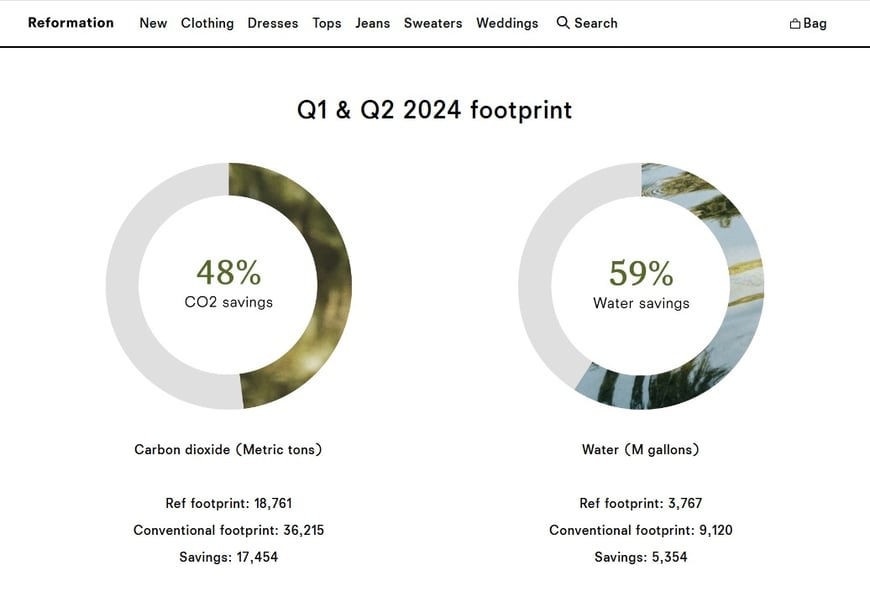
From Reformation’s official website (https://www.thereformation.com/sustainability/what-is-refscale.html)
Every year, Reformation partners with third-party consultants to review and validate their in-house assessment tool, RefScale. They’ve also made their calculation methods public, allowing for greater transparency and accountability. By thoroughly understanding the costs associated with production, Reformation has built a sustainable business model that continues to evolve.
· LENA - The Fashion Library from the Netherlands: Taking on Sustainable Fashion
When we think of sustainable fashion, we often associate it with eco-friendly materials or ethical labor practices. However, clothing rental is also an important aspect of sustainable fashion. Based in Amsterdam, “LENA – The Fashion Library” operates like a library, but for clothes. Their vibrant collection of garments can be rented at varying prices depending on the item. Loved an item? You can also purchase it outright.
Clothing rental aligns with the principles of a circular economy, which aims to optimize resource use and reduce waste. By sharing garments, LENA minimizes the need for new resources and reduces clothing disposal, which helps cut CO2 emissions generated by incineration.
LENA’s collection is also available on an online platform for rental or purchase. By analyzing user behavior and preferences, LENA provides personalized services, improving customer satisfaction while optimizing inventory management and marketing strategies.
The above content is reproduced from “wearware ”
wearware | Supporting the Digitalization of Fashion Design (shimaseiki.com)
0 comments